
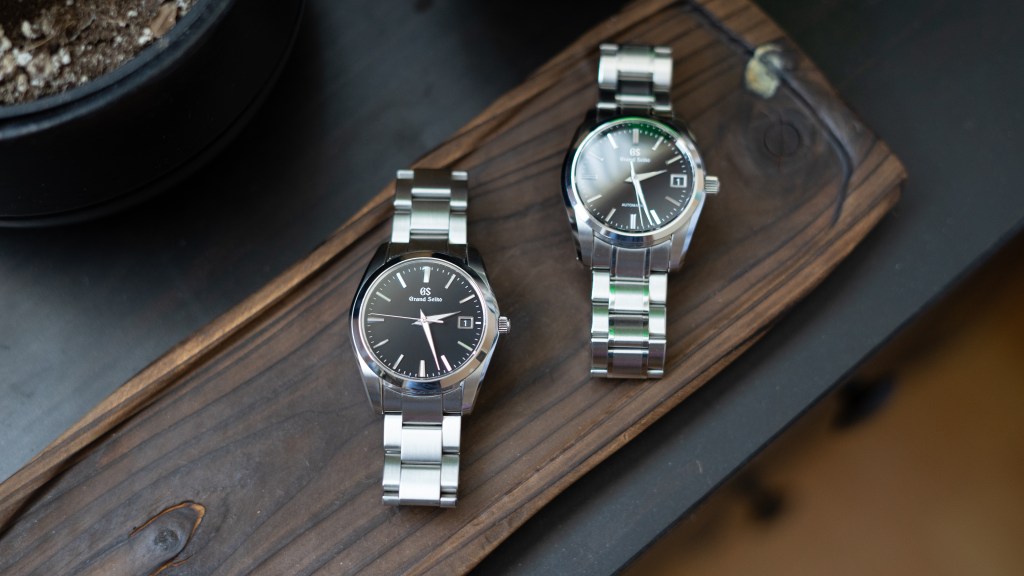
One quartz robot, one mechanical automaton, two strikingly similar watches
Specs
SBGX261
Diameter: 37mm
Lug to lug: 44.6mm
Thickness: 10mm
Lug width: 19mm
Water resistance: 100m
Movement: Grand Seiko 9F62 (high accuracy quartz)

SBGR253
Diameter: 37mm
Lug to lug: 44.6mm
Thickness: 13.3mm
Lug width: 19mm
Water resistance: 100m
Movement: Grand Seiko 9S65 (automatic)
Disclaimer: The opinions expressed in this article are solely those of the author. They do not necessarily reflect the view of WatchYaGot.blog. Take your anger out on G please and thank you.
TLDR
The SBGR253 is, in my opinion, a far superior watch but it comes with a heftier price tag that will extend to regular servicing. The finishing and design overall is of a higher standard on the SBGR, but there is one main downside, the thickness. The wearability and HAQ convenience are where the SBGX261 shines, but it falls way behind with its lackluster and cheap-looking dial (don’t shoot the messenger plz).
The Meat n’ Potatoes
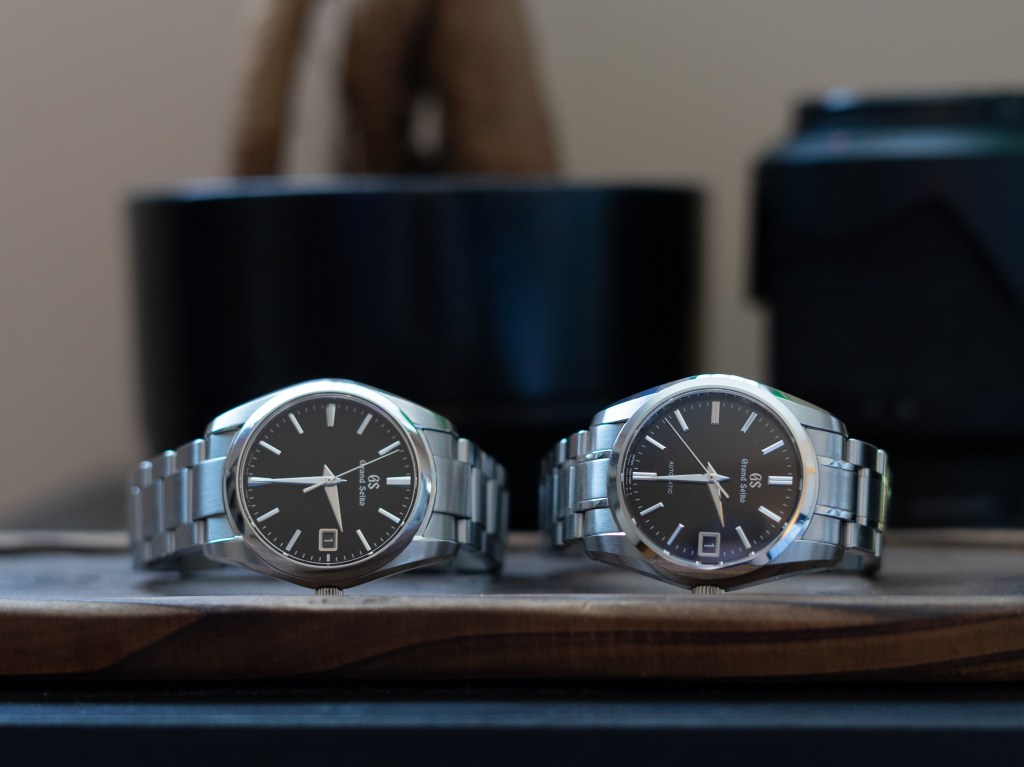
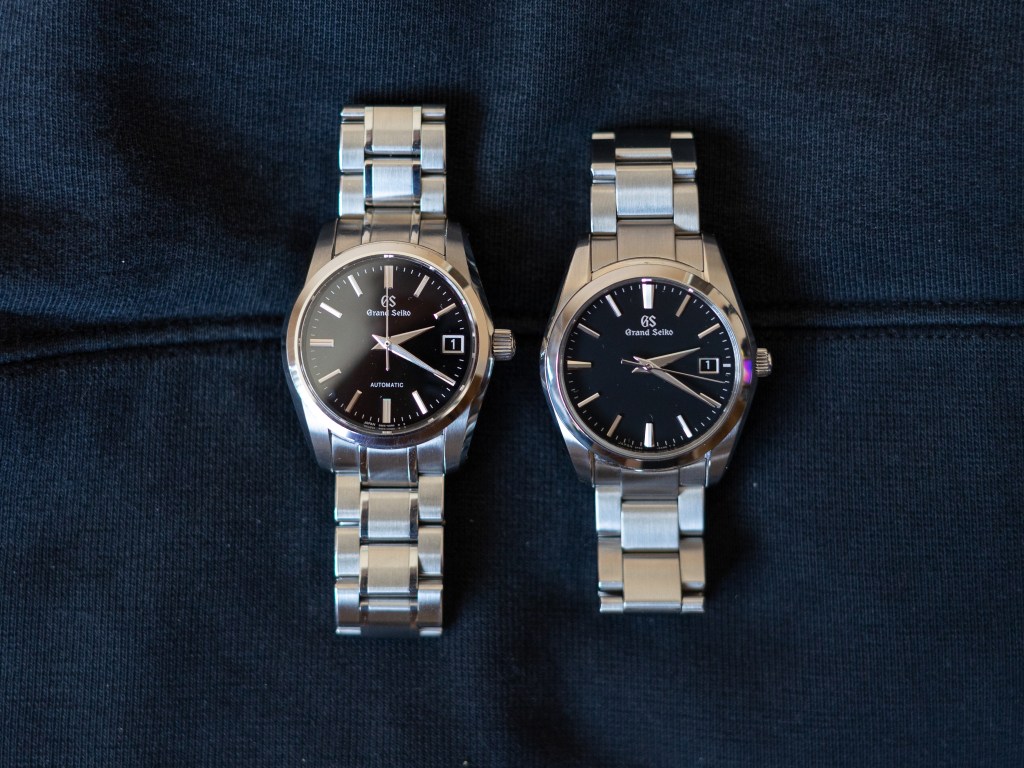
At a glance and to the untrained eyes of watch Gentiles these are two examples of the same thing (enter Pam’s “they’re the same picture” Office meme). Same size, same color, same layout, same overall design. But when we look a little closer, and especially under the hood, the differences become apparent.
I have here Grand Seikos SBGX261 and SBGR253. Each is an entry-level piece in its respective category of quartz and automatic on the secondary market, but the latter is almost twice the price of the former. What accounts for this price discrepancy and is it justified? Spoiler alert: I’m not going to give you a definitive answer, you decide for yourself.
Well, first we need to discuss the biggest practical difference, the movement. The SBGX (I’m dropping the numbers to give my fingers a rest) houses Grand Seiko’s legendary 9F62 quartz movement while the SBGR is powered by the automatic 9S65. Both are respected, hand-finished, decorated, in-house movements fully assembled by Grand Seiko. I won’t go into too much detail because you can read all about these on Grand Seiko’s website or watch the very informative Worn and Wound videos, which I will link at the end of the article. But it’s worth going over the basics for the uninitiated (note to the initiated: skip the next two boring paragraphs that you’ve read on every GS article).
The 9F62 is a high accuracy quartz (HAQ) movement with a stated accuracy of +/-10 seconds a year. My particular example is on track to gain 15 seconds and while that is out of spec the 9F can be easily adjusted at any ordinary watch repair shop. The same goes for changing the battery, which sits outside of the “protective shield” that houses the rotor. According to Grand Seiko, this means that the movement is never at risk of getting dust inside during battery changes and gives the 9F an insane service interval of 50 years. Considering this movement has not been around for 50 years yet, we’ll just have to wait and see if that is true. Remindme! 50 years. Rather than sourcing quartz, like most companies, Grand Seiko actually grows their own crystals so they can ensure that only the highest quality/accuracy ones are selected for their watches. It’s also worth noting that the movement is actually decorated, something very rare for a quartz watch, but GS has sadly chosen to cover this unique beauty with a steel caseback.
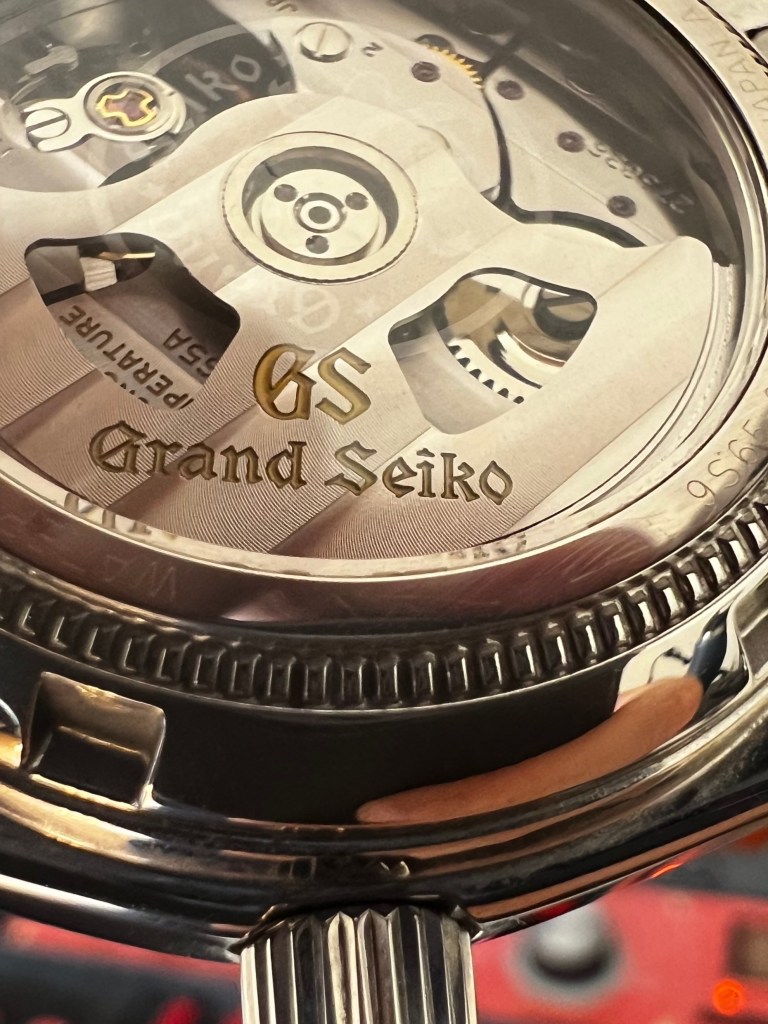
The 9S65 on the other hand is entirely mechanical sweeping away at 28,800 vibrations per hour, or 8 ticks per second. It has a 3-day power reserve and a stated accuracy of -3/+5 seconds per day. Grand Seiko actually tests their mechanical movements in 6 different positions, an even higher standard than that of chronometer certification. Mine is losing about 2 seconds a day and I’m quite happy with that. In contrast to that of the SBGX and the SBGR253’s older sibling the SBGR053, the movement here can be seen in all its metal and jewel glory through a display caseback. And don’t miss the little detail on the display crystal itself! As on a collectible holographic Pokemon card, in the right lighting and at the right angle you can see the famous Grand Seiko lion logo. There are plenty of far more expensive Grand Seikos where they simply slap the logo on there like it’s a sticker obscuring much of the movement (insert man slapping tape on leaking glass tank with GS logo edited into his hand). I’m glad to see they went with a more subtle application here.
Both watches have 100 meters of water resistance and similar dimensions with one big difference: the SBGX is a pleasantly wearable 10mm tall while the SBGR stands at a fairly chonky 13.3mm high. That’s on par with some dive watches! Because of the thickness, the SBGR wears a bit larger on the wrist. It certainly isn’t a deal-breaker and many people who prefer larger watches will actually prefer the heft. For me though, it is a slight mark against the watch simply because I prefer smaller, thinner watches in general. Both cases, however, sit well enough on my 6.5 inch wrist.
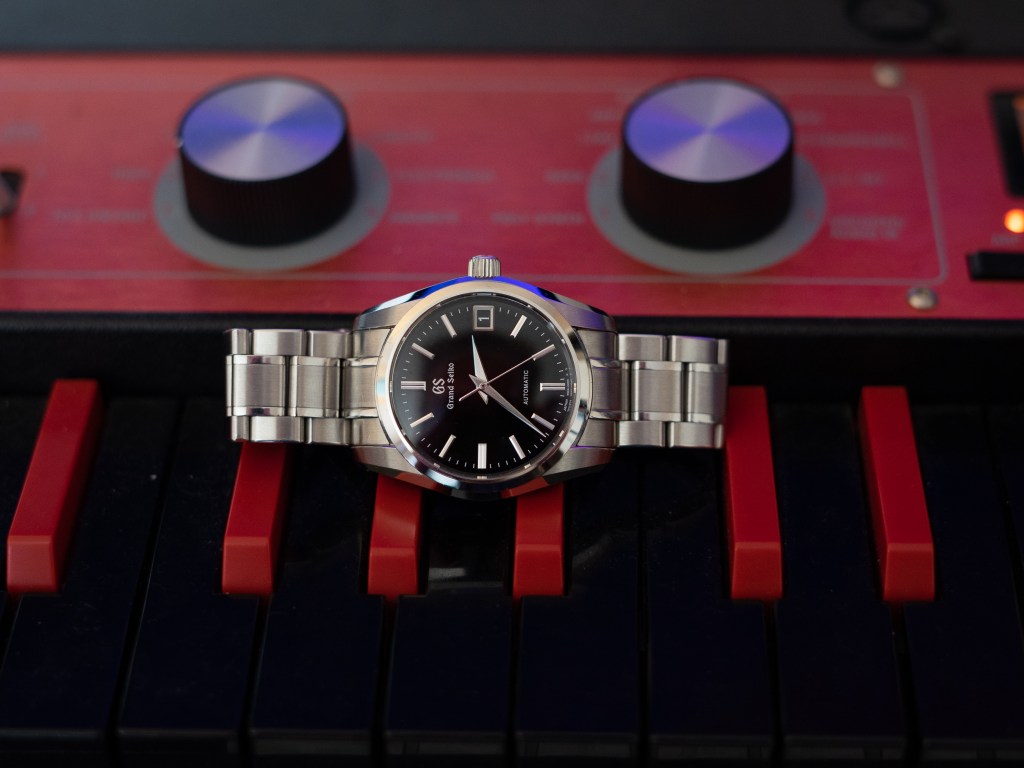
It isn’t just the height that gives the SBGR more presence though. There is a huge difference in finishing quality that can’t truly be captured on camera. While the SBGX has a slightly beveled edge on the side of the case and lugs, the SBGR has a thick mirror-like chamfer that will burn your eyes out (in the best way) in certain lighting/angles and disappear into blackness in other conditions. The extra polishing also extends to the bracelet. The SBGX oyster-style bracelet is entirely brushed giving it a more casual, everyday look and feel, but the high polished flanks to the center links on the SBGR add a clear touch of luxury. The fact that these polished accents surround your whole wrist draws more attention to the watch. It looks expensive. That will attract some buyers and turn others off.
The SBGX on the other hand is far less flashy almost everywhere you look. Of course, it features the famed Zaratsu polishing on the case, but the quality seems to be lacking when you see it right next to the SBGR. Do they spend less time polishing the entry-level quartz models? Is it simply the size of the chamfer and the sheer number of polishing instances that make the SBGR seem so much more stunning? I’m not entirely sure, but whatever the cause of the difference is it’s significant. None of this is a problem for the SBGX, however. It’s a far less expensive watch and I actually feel a little bit self-conscious sporting the almost blingy SBGR in certain situations. I don’t like when people notice my watch. I just want you, dear reader, to notice.
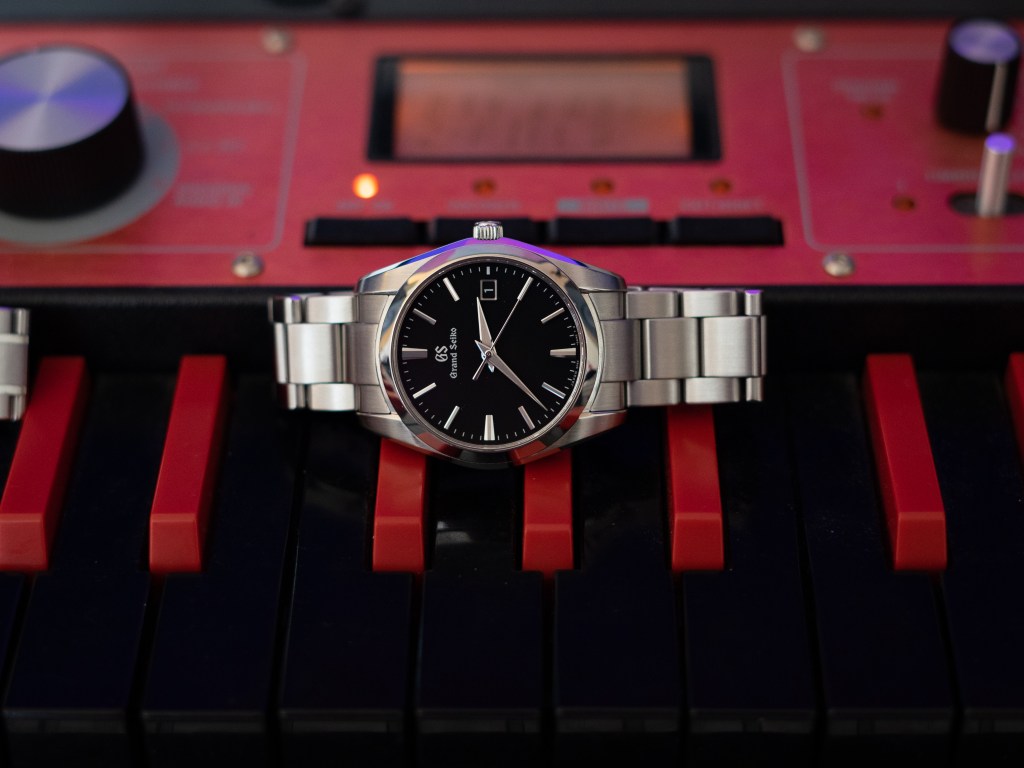
But there is one area where I think the SBGX is particularly lacking: the dial. This is actually the second 261 that I’ve owned. I enjoyed it enough that when offered this new one as part of a trade deal, I decided I’d like to be reunited with my old friend. But I remember the first time I opened the box to my first 261. It was my first ever Grand Seiko. I’d never even seen one in person before though I’d read countless articles and seen numerous videos of fanfolk gushing over the quality of Zaratsu polishing and the impressive dial work. While I was still no doubt in love with the watch, I was disappointed. The polishing was good, but nothing crazy (unlike the SBGR), but most notably, the dial looked cheap. It appears to be a deep gloss black in many photos, but it’s actually matte and reads a sort of grey/black in natural lighting. That’s not a problem, as I’ve owned plenty of matte black dials, but this one, for whatever reason, looks cheap to me. I’m not the only one.
My girlfriend was wearing this one day (on a strap, it’s worth mentioning) and commented that “it looks like a Target watch.” I know! I extend my deepest apologies to all you GS fanboys and girls out there and those were HER words, not mine! But…. while the case, indices, and handset all live up to the Grand Seiko name, the dial falls far short in my view. It honestly reminded me of my fake Daniel Wellington’s matte black dial (yes I got a fake DW when I briefly lived in China long before I knew a thing about watches. Though is it really any different from a real one? Probably came from the same Ali Express supplier factory). Ok so those are my words and I can’t hide behind my big strong girlfriend there. It’s just something that I think needs to be considered before buying a thousand-plus dollar quartz watch. The movement is an absolute beast, the indices and hands sparkle like a million bucks on top of that less-than-a-million bucks dial, and it’s the perfect fit for a person with my wrist size, but it’s definitely not a keeper for me. There are plenty of 9F’s out there with more exciting dials, case designs, and functions. I will forever be kicking myself for selling my SBGF019 (8J HAQ), even considering the pretty penny I was given for it.
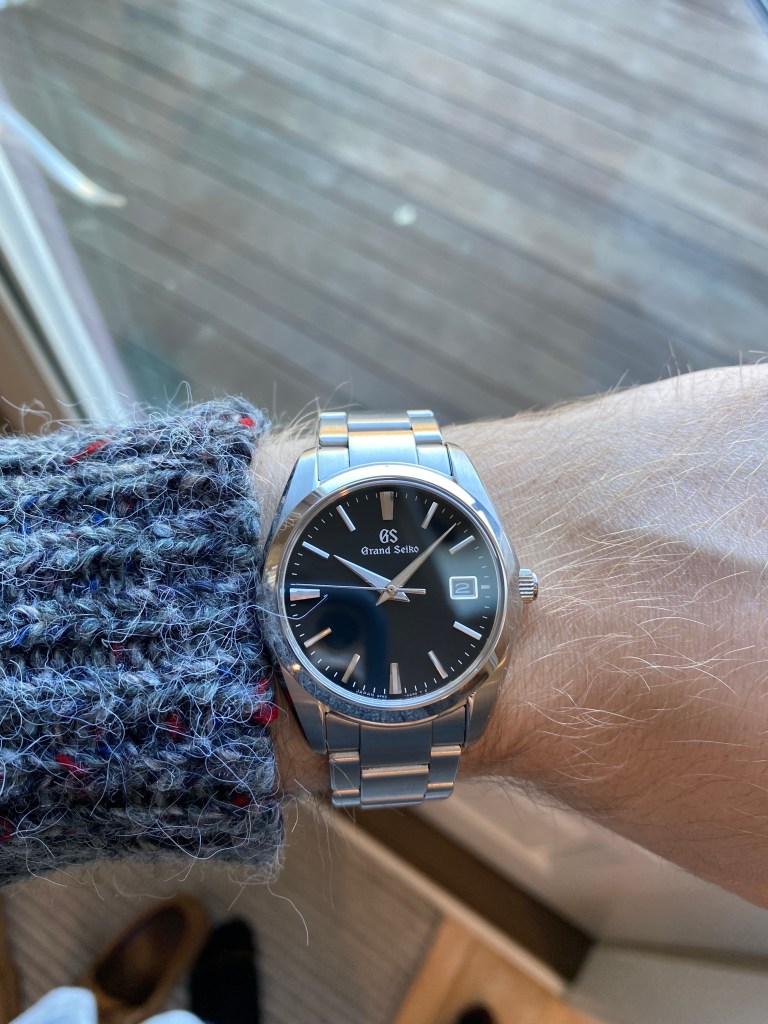
All that being said, with the exception of the older 8J pieces, the SBGX is the most affordable option and the best way to experience Grand Seiko without breaking the bank, or perhaps by just breaking it a little bit. Like the simple design and black dial but want to break the bank like John Dillinger and get a superior watch? SBGR253 is the way to go.
-G
P.S. to my legions of followers, this site, as well as my up-close photography, is a work in progress. Please forgive me when I fail to be Hodinkee. Cheers!
Sources
https://www.grand-seiko.com/global-en/collections/movement/mechanical/9s65
https://www.grand-seiko.com/us-en/collections/movement/quartz
 WatchYaGot
Leave a comment